Home / Kits
Keepsake 01 · The shirt
Wool, Cotton and the First Shiny Polyester
It's at the bottom of the crate, folded wrong, smelling faintly of a garage. Hold it up and the years come back.
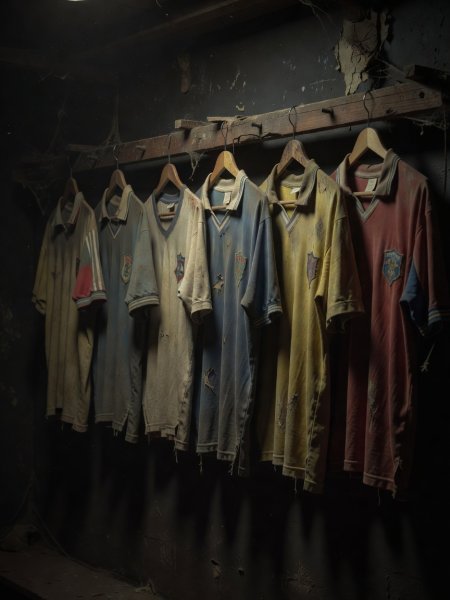
Everyone of a certain age has one. Maybe it was a birthday present two sizes too big "so you'll grow into it". Maybe it was bought from a market stall and the badge came off in the third wash. Either way, a football shirt is the keepsake most of us held closest, quite literally, and its history is stranger than the glossy club shops suggest.
For the first eighty years of organised football, a shirt was simply a way of telling one team from another. There were no replica sales to speak of, no sponsors and, for a long while, no numbers. Fans wore scarves, rosettes and flat caps. The shirt belonged on the pitch. How it found its way into our wardrobes, and then our lofts, is a story of fabric, television and money.
Wool and lace-up collars
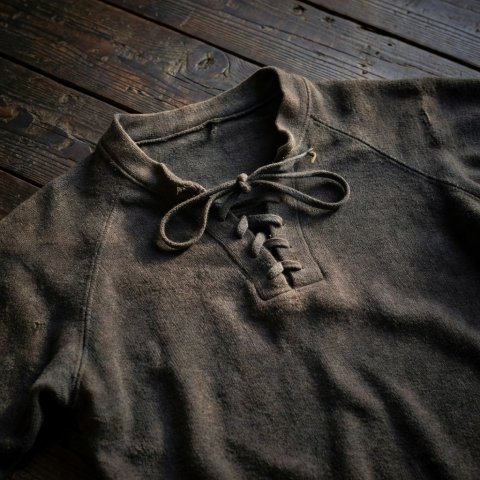
Victorian and Edwardian players wore heavy wool or flannel jerseys, often with lace-up collars at the neck. They were warm on a frosty afternoon and dreadful in the rain, soaking up water until they weighed far more than when the players ran out.
Colours were chosen for practical reasons as much as pride: a dye that held, a design rivals didn't already use. Many clubs still play in colours fixed in this era.
Numbers on backs
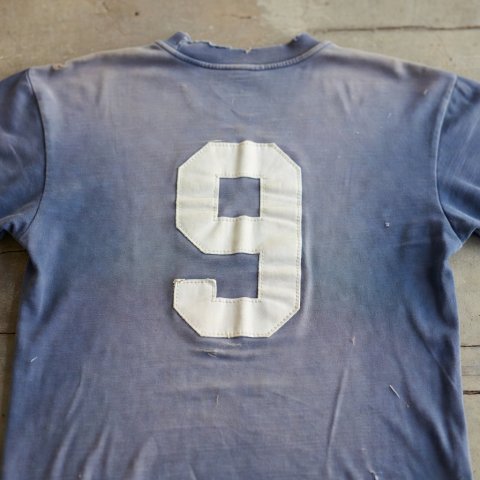
On 25 August 1928 Arsenal and Chelsea both wore numbers in league matches, an experiment rather than a rule. At the 1933 FA Cup Final, Everton wore 1 to 11 and Manchester City 12 to 22. The Football League finally made numbering compulsory in 1939.
Those numbers described positions, not people. The number 9 was a centre-forward, whoever pulled it on.
Cotton, crew necks and continental style
After the war, lighter cotton shirts with V-necks and crew necks spread through the British game, encouraged by the lighter kit seen on continental and South American sides. Collars shrank, sleeves were sometimes cut short, and manufacturers such as Umbro, founded in Wilmslow in 1924, and Bukta became familiar names.
Polyester, replicas and sponsors
In the 1970s Admiral saw that fans would buy the shirts their heroes wore, supplying Leeds United from 1973 and England from 1974 with bold designs that carried the maker's logo. In 1976 Kettering Town wore "Kettering Tyres", and in 1979 Liverpool signed with Hitachi. By the late 1980s, shiny polyester and jacquard patterns were everywhere.
In 1993–94 the Premier League introduced squad numbers with names on the back, and the number 9 finally belonged to someone.
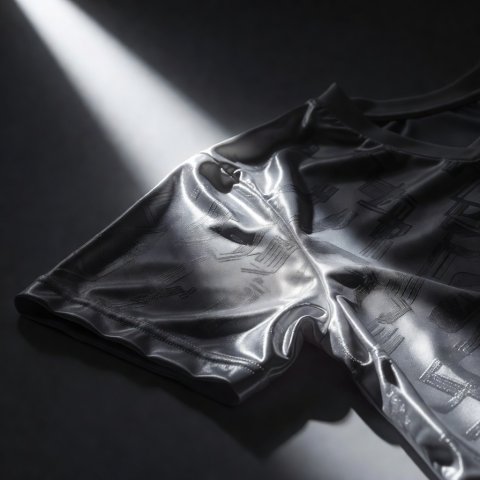
Then and now
| Feature | Then | Now |
|---|---|---|
| Fabric | Wool, then cotton; heavy when wet | Lightweight recycled polyester with ventilation |
| Numbers | 1–11 by position, compulsory from 1939 | Fixed squad numbers with names |
| Front of shirt | Badge only, sometimes not even that | Badge, maker's logo and sponsor |
| Fan version | Rare before the 1970s | Replica and authentic versions every season |
None of this makes the modern shirt worse. Today's kits are lighter, cooler and kinder to the people wearing them for ninety minutes. But the old ones had a weight in the hand, and a smell, that the new ones never will.
If you've got one in the loft, check the label before you wash it: older cotton shrinks, and early transfers crack. Store it folded in acid-free tissue, away from sunlight, and it'll outlast us all.