Home / Stickers
Keepsake 02 · The album
The Album With One Missing Face
A rubber band, a stack of doubles, and one empty rectangle you stared at for an entire spring.
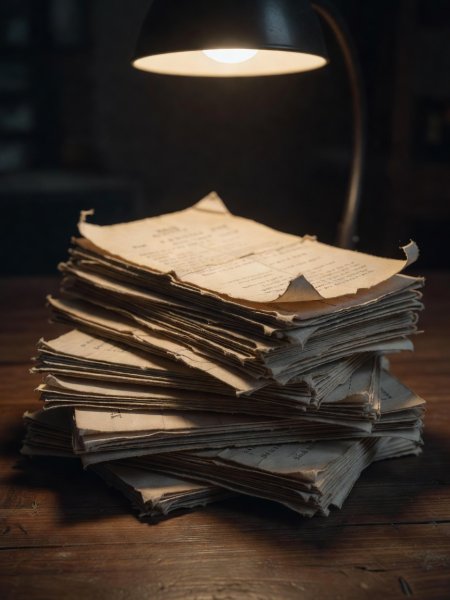
Paper was how most of us owned football. You couldn't take a goal home, but you could take a programme, a sticker, a comic or a results paper, and you could keep it forever. Open the album now and the smell is instant: old glue, cheap card, a hint of the newsagent's counter.
The rituals were universal. Fanning through a stack muttering "got, got, got". The thrill of a shiny badge. The playground bargaining that taught exchange rates better than any maths lesson. Behind all that is a century of printing history.
Cigarette cards
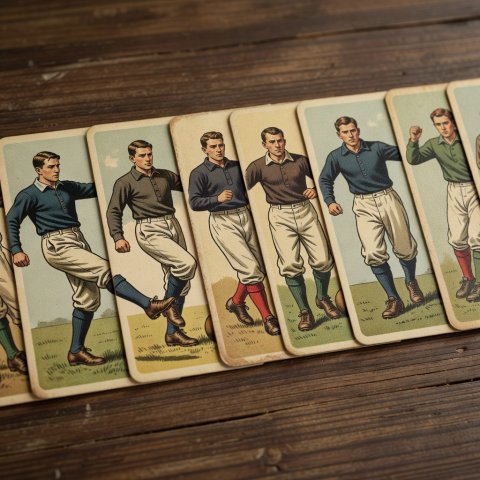
Before stickers came cards. From the late nineteenth century, tobacco firms such as Ogden's, W.D. & H.O. Wills and John Player slipped illustrated cards into packets to stiffen them and keep customers loyal. Footballers were a favourite subject, and collecting a full set was a serious hobby for men and boys alike.
Thin programmes
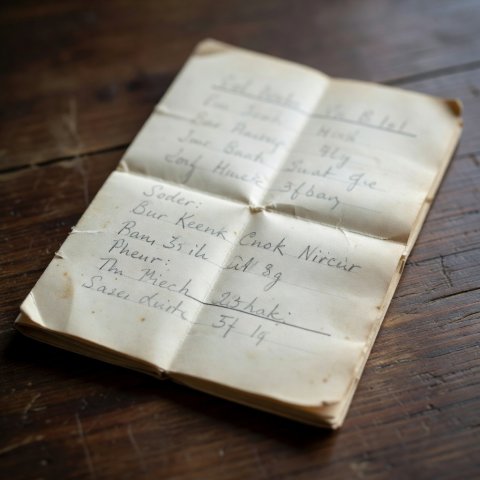
Programmes date back to the late Victorian game, but the ones many collectors prize most are post-war issues printed on a single folded sheet, because paper was still rationed. Team line-ups, a few notes from the club and adverts for local businesses. Fans scribbled scorers on the back, and those biro marks now make them unique.
Panini arrives
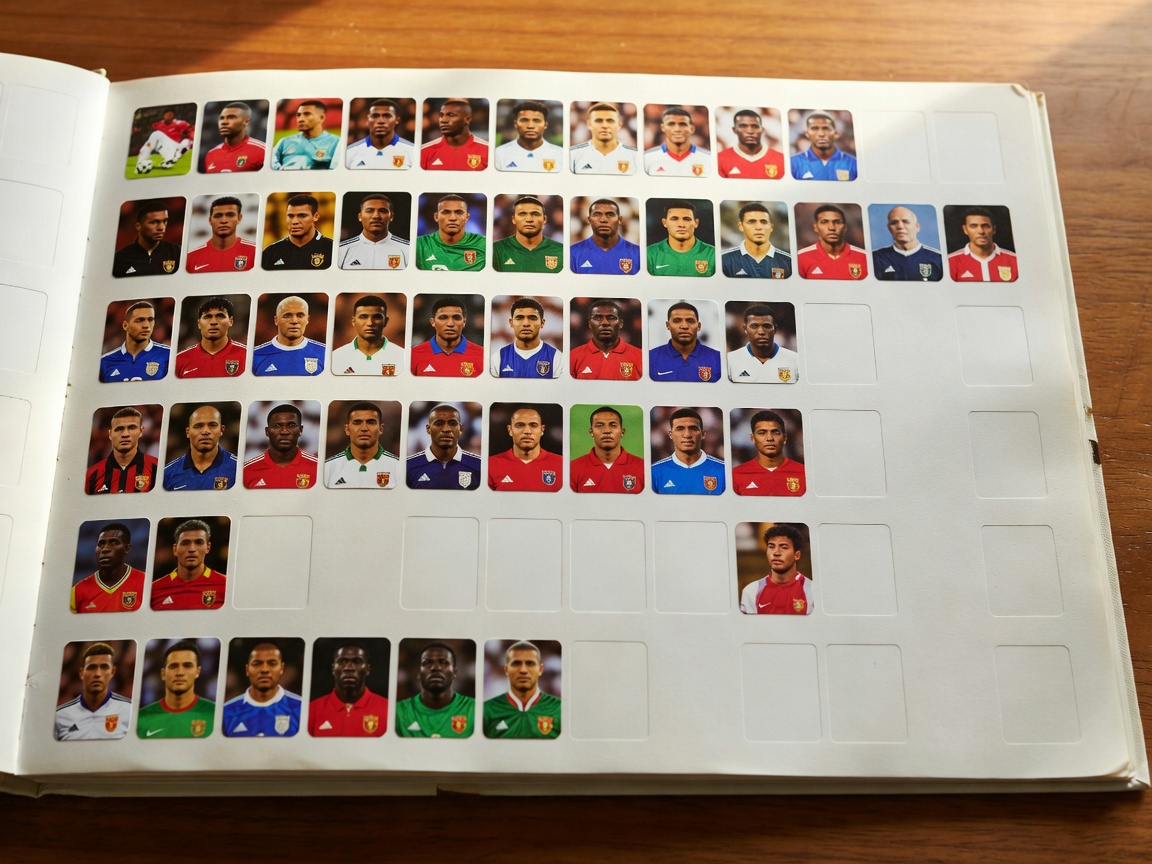
In Modena, the Panini brothers released their first football sticker album, Calciatori, for the 1961–62 Italian season. Their first World Cup album followed for Mexico 1970, and in Britain Panini's first domestic league collection, Football 78, landed in newsagents for the 1977–78 season. Before that, British children had collected FKS albums and A&BC gum cards.
Comics and magazines
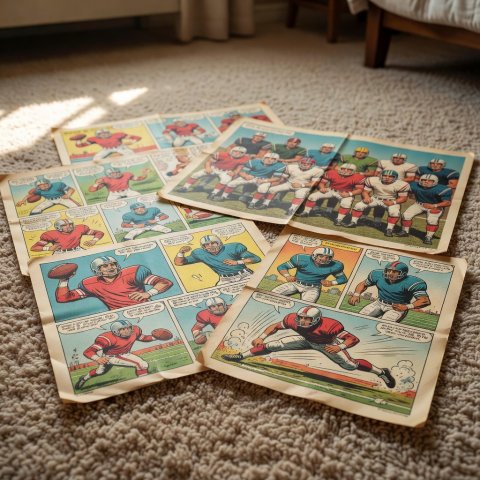
Roy of the Rovers began as a strip in the comic Tiger in 1954 and got its own weekly title in 1976. Shoot! launched in 1969 and Match in 1979, both with pull-out posters that ended up on bedroom walls. Saturday evenings brought the local results papers, often printed on pink or green paper.
Then and now
| Item | Then | Now |
|---|---|---|
| Collecting | Cigarette cards, gum cards, sticker packets | Sticker albums still sold, plus digital collections |
| Swapping | Playground, face to face | Playground, online groups and swap events |
| Programme | Thin sheet, often a few pence | Glossy magazine, sometimes digital only |
| Results | Saturday evening results paper | Live on a phone |
Children still swap stickers in playgrounds today, which is one of the loveliest continuities in the game. The rubber bands and the doubles survive.
If you're keeping old programmes, store them flat in acid-free sleeves and resist the temptation to remove staples unless they've rusted. And if your album still has one empty space, there's no shame in it. Most of ours do.